How to Wash a Hadatai
Ideally wash your hadatai after use, the sooner the better. Sweat, skin oils, makeup, and dirt become harder to remove when they remain in the fabric.
Quick care checklist
- Treat stains promptly and follow the stain remover's directions.
- Hand wash, or use a cold gentle machine cycle.
- If machine washing, place each Hadatai in its own mesh laundry bag.
- Wash separately from rough, dark, or heavily soiled garments.
- Use a small amount of detergent, ideally one that is free of optical brighteners and meant for synthetic fabrics.
- Never use chlorine bleach or fabric softener.
- Rinse thoroughly.
- Air dry away from high heat and direct sunlight.
Want suggestions on what to use? Jump to stain remover guidance or detergent guidance.
Common Hadatai stains and how to target them
Most modern stain fighters use various enzymes to break down specific types of stains, with most stain products having a mix of various enzymes to target multiple stain types. Knowing what you're trying to target is key to solving the right type of problem.
For the purposes of most hadatai stains, we generally want a stain remover that contains Protease and Lipase enzymes, with other enzymes being a bonus to help with other types of stains.
Apply the product as directed. Gently work it into the fabric with gloved fingers or a soft brush like a dedicated spare toothbrush. Let sit as per instructions, and wash thoroughly. Aggressive rubbing can roughen the surface, we just want to work it in not scrub the stain out.
Sweat, skin oil, and dirt
Solution: Use a stain remover containing Protease and Lipase enzymes.
Common Hadatai stains include sweat and skin oils that hold dirt in the fabric, especially around the hands and feet.
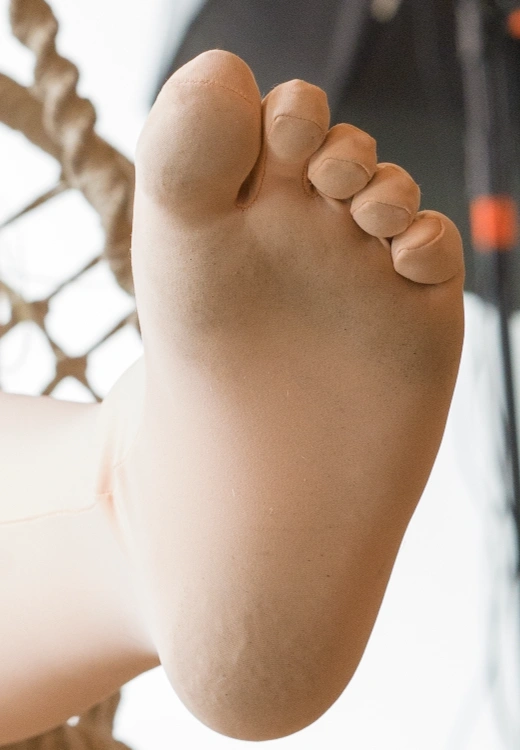
Darkened soles caused by accumulated dirt, treating them promptly reduces the chance of a lasting stain.
A normal wash alone may not remove oily buildup without spot stain treatment, as the same properties that make sweat wicking fabric function also tend to hold onto sweat and oils. For more nerdy information, see this paper on stain removal from moisture-wicking fabric during home laundry.
Bodily fluids
Rinse with cold water and check the care label before treatment. Protein stains may respond to a protease-based product, but follow its directions and test for colorfastness.
Makeup stains
For oil-based makeup, a color-safe product containing lipase may help. Check the product directions and test first.
Food stains
Solution: Varies
Food stains contain different combinations of starch, protein, fat, and plant material:
- Starchy foods and sauces benefit from Amylase
- Protein based foods benefit from Protease
- Fat based foods benefit from Lipase
- Fruit stains benefit from Pectinase
You might not have access to the perfect enzyme for the job, but you can usually target at least one component to do better than nothing.
Stain Remover Recommendations
Availability and formulas vary by region, but some common options include:
-
Puracy's Laundry Stain Remover
- Contains Protease and Lipase enzymes, as well as Amylase, Pectinase and mannanase enzymes for various food stains.
-
365 by Whole Foods Market Stain Remover
- Protease and Amylase. Also contains Lipase, Pectate Lyase, and Mannanase for food stains.
-
Berkley Green Baby Fabric Stain Remover
- Lipase and Protease, amylase and mannanase for food stains.
-
Zout Triple Action
- Contains Protease and Lipase, as well as Amylase enzymes.
-
Lion brand "Top Nanox for collars and sleeves"
- A concentrated Japanese stain remover marketed for collar and sleeve oils, availability outside Japan may be limited.
Know another well-documented option in your region? Please open an issue. The additional resources include another product list.
General-purpose options
These products may rely on protease, other enzymes, oxidizers, or surfactants rather than lipase. Check the current formula and choose for the stain you have.
-
Tide OxiPro Stain Remover - Grease Stains
- Lipase but no protease. Good for sebum based stains.
-
OxiClean Max Force Spray and Max Gel
- Formula includes protease, amylase, mannanase, surfactants, and oxidizing ingredients.
-
Shout Active Enzyme "Triple-acting" stain remover
- Formula uses protease and surfactants. "Triple-acting" is more a marketing term than any meaningful triple action.
-
Carbona Bio-enzyme Stain Remover
- Formula uses protease and surfactants.
Non-recommended options
Some products are unsuitable for Hadatai fabric or less targeted to common oil-based marks:
-
Dove soap
- Hand and beauty bars are formulated for skin, not laundry. They can leave conditioning ingredients or residue and are harder to rinse consistently than a textile stain product. They also just plain do not work great for hadatai stains.
-
Liquid (chlorine) bleach
- Can damage and discolor a Hadatai, avoid it.
-
Oxygen bleach powders (ie oxycleanOxyclean, Resolve, oxi-type powders)
- Good for oxidizable stains (grass, blood, coffee, fruit juice, antiperspirant, etc) but not much for most common hadatai stains. Notably many include optical brighteners which can cause shifts in color over time.
-
Any "white revive" or "white boost" products
- Optical brighteners, avoid. Pointless for hadatai, will cause shifts in color over time.
-
Stain sheets or color catchers
- These are intended to capture loose dye, not actually removing existing stains. Washing the Hadatai separately is more relevant here.
-
Shout Advanced Grease Busting Foam
- Solvent-based foam may affect dyes or finishes. Avoid.
Most stain removers you can usually google "product + ingredients" to find out what they contain. If they're ambiguous, its probably a mediocre formulation.
Washing
Detergents
Hadatai owing to being synthetic blends are not as sensitive to detergents as some fabrics, but that doesn't mean you should throw it in with other clothes.
The ideal detergent is one that works well on synthetics and doesn't contain optical brighteners.
Some suggestions in no particular order are:
- Tide Free and Gentle in Liquid Form, also called "Hygienic Clean" in some regions
- ECOS Hypoallergenic Laundry Detergent with Enzymes
- Puracy Laundry Detergent
- The Unscented Company Plastic-Free Laundry Detergent Pacs
- EcoMax Heavy Duty and Sports formulae
- Mrs Meyers Clean Day Detergent
- Wishing Well Laundry Detergent
- Koala Eco Laundry Wash
- Aldi's Tandil Premium Free & Clear
- Purex Free & Clear
Woolite is another option albeit with a rather outdated formula lacking enzymes. It's intended for wool fabrics, not designed for synthetics like what Hadatai are made of.
It wont damage hadatai, it just wont be as effective.
Detergents to Skip
Due to optical brighteners (OBAs), skip:
- All tide powders
- Gain powder detergents
- Just about any "whitening" or "brightening" products
Hand Washing
Hand washing gives you direct control over agitation and is a conservative choice for delicate construction.
Use only a bit of detergent in cold water, rinse until the water is clear, and do not wring or stretch it. To remove excess water, lay it flat on a clean towel and roll the towel gently.
Machine Washing
Use a cold gentle cycle and the detergent's dosage for a small, lightly soiled load. Put each Hadatai in its own mesh laundry bag to reduce snagging and twisting.
Avoid washing with other dirty clothes or items. With another hadatai or shapewear is usually fine, but be mindful of the potential for dyes or stains to transfer form one item to another.
Rinsing Suggestions
An extra water-only rinse can help when detergent remains in the fabric.
"Rinse aid" products like "Tide Clean Boost" or "P&G Rinse and Refresh" can help improve the rinsing process even further.
They are not fabric softeners, but essentially citric acid based products that help remove any remaining detergent from the fabric.
You also can technically make your own easily by mixing citric acid with water. Google "citric acid laundry rinsing" if you want to try it out and save money while getting better laundry results, or to learn more about why any of this is a thing.
Drying
Leave the Hadatai to air dry. Do not put it in a clothes dryer. If you absolutely need to use a dryer, use the lowest possible heat setting to avoid damaging the fabric and avoid using any dryer sheets or similar products.
Dry the Hadatai with good air circulation and support its weight so the wet fabric does not stretch. A drying rack is preferable to a narrow hanger.
To speed drying after hand washing, briefly roll it in a clean towel to absorb water. Do not wring or twist it.
Post Wash Care and other tips
Depilling
Pilling may develop at high-friction areas such as hands, feet, and joints. A fabric depiller can help reduce them.
Avoid velcro-type fasteners, they are a hadatai's worst enemy.
The case for multiple Hadatai
Some performers keep separate Hadatai for active convention wear and controlled photoshoots.
Basically having a hadatai set aside for their most pristine, controlled photo shoots, and at least one other for cons or any shoots in the outdoors.
Having multiple for cons can be useful too if you are hoping to kig multiple days in a row, although hand washing and drying is always an option to keep odours at bay.
Also worth keeping in mind, if your hadatai does get damaged, having a backup avoids having to put kigging on hold until you can get a replacement, although that might be a bit obvious.
When stains remain
If theres stains that just wont come out, all feels hopeless, and you're ready to throw it away theres one last resort that might be worth a try.
An intensive treatment can be done using a combination of Lipase, Oxygen Bleach, Ammonia, and Detergent products over several hours to try to strip all that you can.
Additional Resources
Notable Reddit /r/Laundry user Kismai has compiled a list of many Lipase containing products and stain removers here. Skip anything that has OBA (Optical Brighteners).